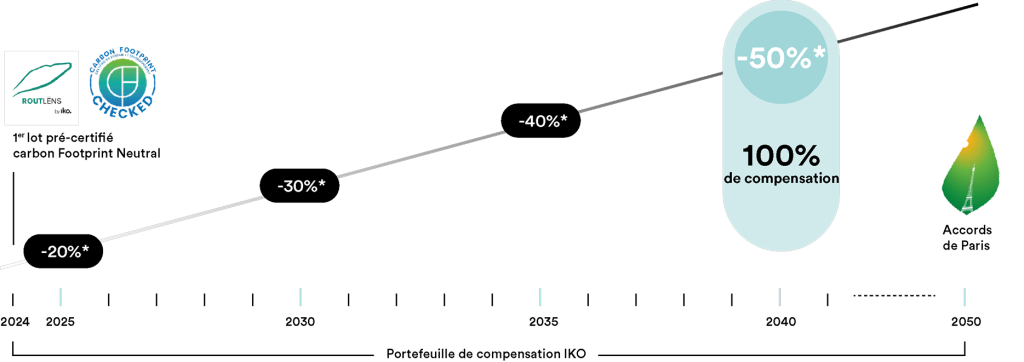
is aligned with the objectives of limiting global warming to well below 2°C, combining absolute targets and intensity targets for our product development activity:
-0%
The absolute reduction targets, driven by the energy performance of our corporate and asset activities, are set at -47% by 2030 compared with our 2021 baseline.
-0%
Operational carbon: targeted reduction of -75% in absolute terms, with the implementation of zero-emission buildings in accordance with the EPBD directives.
Embodied carbon: intensity reduction per m² UIA compared with 2020:
New actions implemented in 2024:
Life Cycle Assessment system
Implementation of a systematic dynamic Life Cycle Assessment (LCA) system for each operation, in order to measure and reduce the carbon footprint from the design phase of real estate development projects;
Carbon and energy monitoring of assets
Deployment of carbon and energy monitoring for assets via CRREM — Carbon Risk Real Estate Monitor — to ensure portfolio compatibility with net-zero pathways;
Taxonomy alignment
Validation of the taxonomy alignment of our assets with the acquisition and ownership of buildings activity, through dedicated climate risk assessments and the ranking of their energy efficiency; an approach voluntarily undertaken by IKO in anticipation of regulatory requirements.
Intégration de objectifs climatiques
Integration of climate objectives at every stage of strategic decision-making: business plans, investment committees, arbitrations and go/no-go decisions.
Carbon offsetting
In collaboration with Stock CO2, we invested in 2024 in a portfolio of nine afforestation or reforestation projects in France’s Grand Est region, certified under the French Low Carbon Label, which recognises the quality of the associated carbon removal credits.
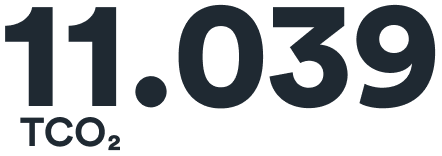
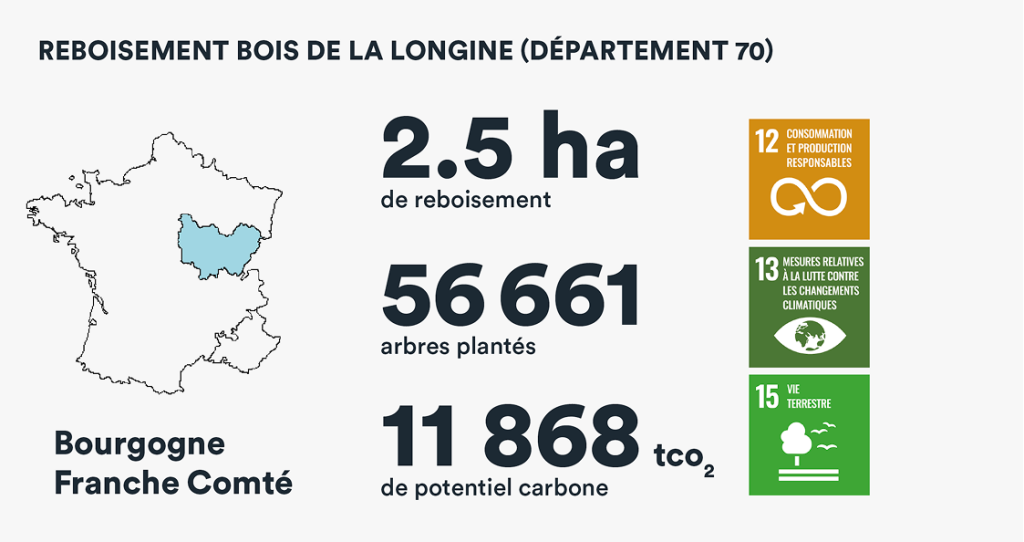
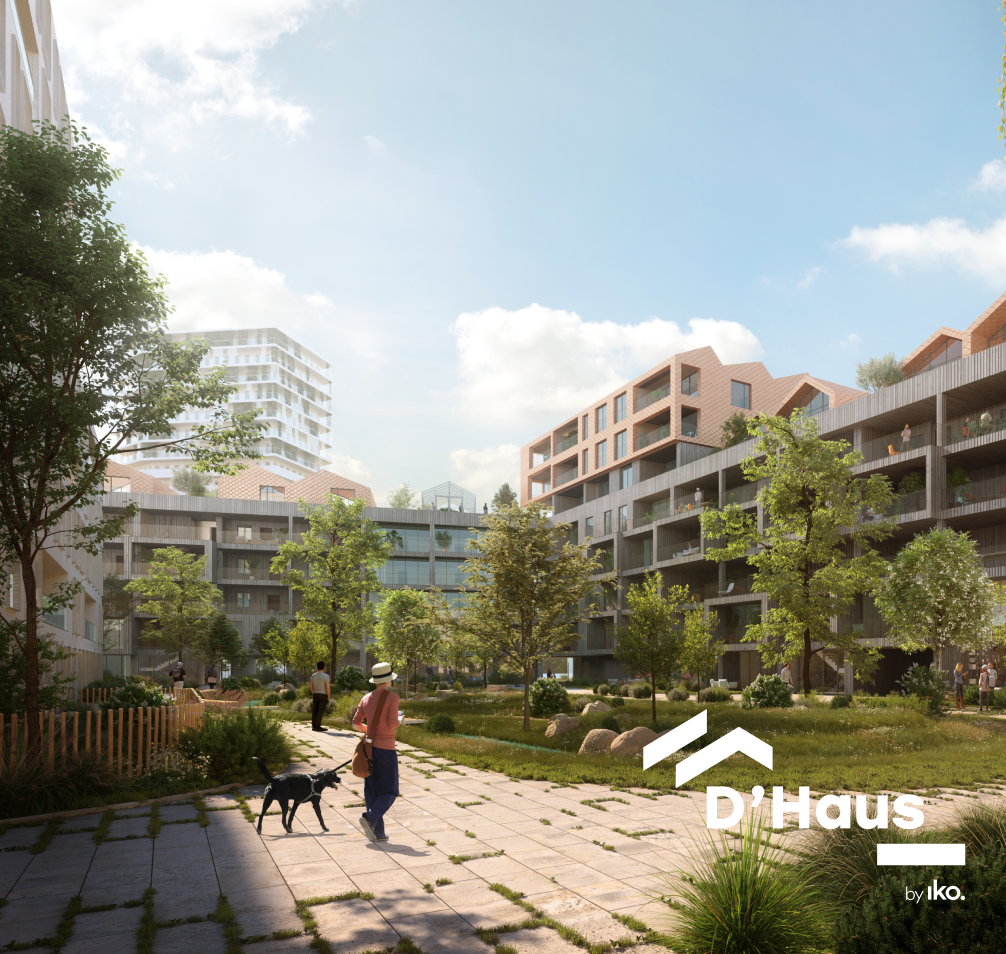
A first cancellation operation of 11,039 tonnes of CO₂ was carried out in order to offset the residual emissions expected for the first construction lot of… Rout Lëns, including the buildings D’Haus, Liicht and the municipality’s first moderate-cost building. This involved financing the reforestation of Bois de la Longine in department 70.
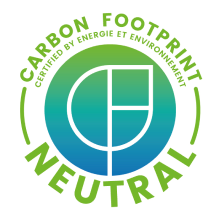
This operation made it possible to obtain the Carbon Footprint Neutral certification, awarded by Energie Environnement, for this first lot, whose carbon performance also reached -38% compared with a corresponding reference project in 2020.
Pollution
The topics identified as priorities according to the double materiality analysis are:
Policy
Concrete actions have been implemented to prevent and reduce the various forms of pollution related to our activities:
Systematic environmental studies carried out from the project design stage.
Systematic environmental studies carried out from the project design stage.
Environmental certification:
Adoption of the BREEAM framework, including specific requirements relating to pollution, nuisances and environmental performance.
Regulated contractual clauses:
Requirement for general contractors to implement strict measures for waste sorting, traceability and recovery, as well as construction site pollution prevention.
Contaminated site management:
Soil remediation on industrial brownfield redevelopment projects, in accordance with applicable standards and under expert supervision;
Dialogue with stakeholders:
Integration of local and institutional expectations into decisions relating to pollution risk management.
This approach applies uniformly to all projects developed by IKO and is subject to operational monitoring by the project teams, even in the absence of a single formal policy document.
Green Construction Site Charter
In 2024, IKO implemented green construction site regulations applicable to all its projects, covering in particular:
Soil pollution and hazardous products
Storage of polluting products on watertight retention systems, protected from bad weather;
Mandatory presence of absorbent kits near machines during each refuelling operation;
Leak containment measures and recovery of accidental effluents.
Waste management
Target of at least 70% recovery of non-hazardous waste;
Selective sorting, traceability through waste transfer notes, and appointment of a waste coordinator by each company;
Priority search for local treatment and reuse channels.
Water protection
Automatic shut-off of the water supply outside construction site working hours;
Reuse of rainwater for cleaning, watering and dust reduction.
Anti-dust fencing, targeted watering and covering of fine materials.
Anti-dust fencing, targeted watering and covering of fine materials.
Airtight storage of VOCs and containment in a secure room.
Treatment of related nuisances
Noise, light, visual impact, biodiversity: precise requirements are integrated, with systematic communication to the neighbourhood and formal handling of complaints.
Water
IKO implements a series of actions to ensure responsible management of this resource:
Rigorous water management on construction sites.
Implementation of strict procedures to prevent any accidental pollution of soils or networks.
Control of water flow and runoff in accordance with local requirements, with monitoring by the teams and partner companies.
Integration of specific water management clauses into construction contracts and environmental monitoring on site.
Conception durable orientée vers une meilleure gestion de l’eau
Installation of rainwater harvesting systems in residential and office buildings for non-potable uses, such as maintenance and irrigation.
Systematic use of low-consumption sanitary equipment, including reduced-flow taps, toilets and showers.
Reduction of soil sealing and natural infiltration of rainwater through swales, permeable surfaces and vegetation.
Asset maintenance (shopping centers and other operated sites)
Mise en place de dispositifs de suivi des consommations d’eau pour détecter toute anomalie ou dérive.
Regular maintenance of hydraulic equipment.
Actions to rationalise and optimise water use in shopping centres, including cleaning, sanitary facilities and green spaces.
Collaboration with technical managers to ensure sustainable performance throughout the building lifecycle.
Biodiversity
"IKO integrates biodiversity preservation into its projects, although no formal indicators have been established yet. This approach translates into concrete measures that promote ecosystems in urban environments. On the Rout Lëns project, 90% of ecological impacts are offset on-site: local species such as lizards were relocated to a protected area for future reintroduction, with habitat restoration (gabion walls). A plane tree was also moved to avoid it being cut down. At the building level, IKO plans, depending on the project, the installation of elements such as nesting boxes or beehives, thus contributing to the strengthening of local biodiversity."
Circular economy
Our circular economy actions are tailored to the nature of our activities:
Real estate development:
Upstream Our deconstruction approach incorporates a waste recovery process that goes beyond regulatory requirements, highlighting the demolition company's capacity for reuse.
During the design phase, a reuse policy is encouraged as part of our low-carbon strategy, depending on the availability of materials on the market.
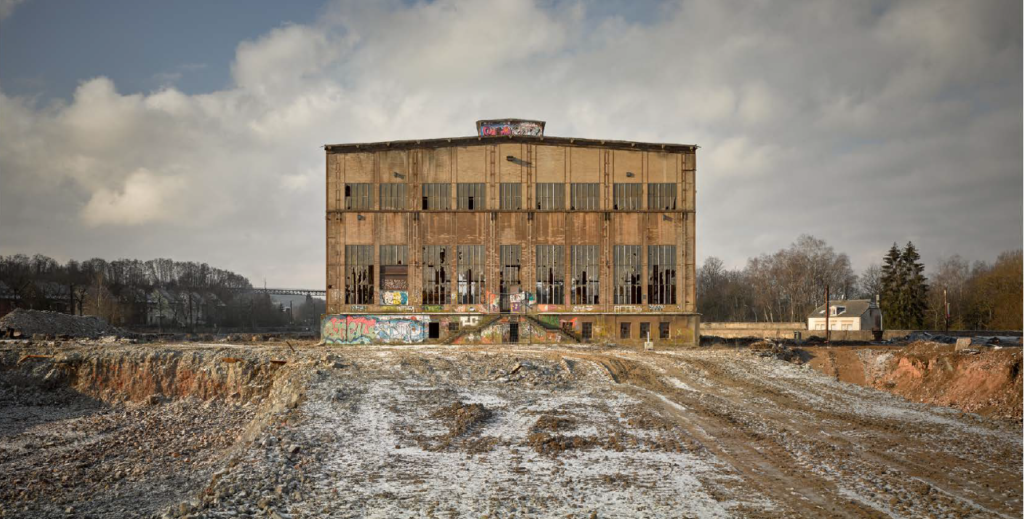
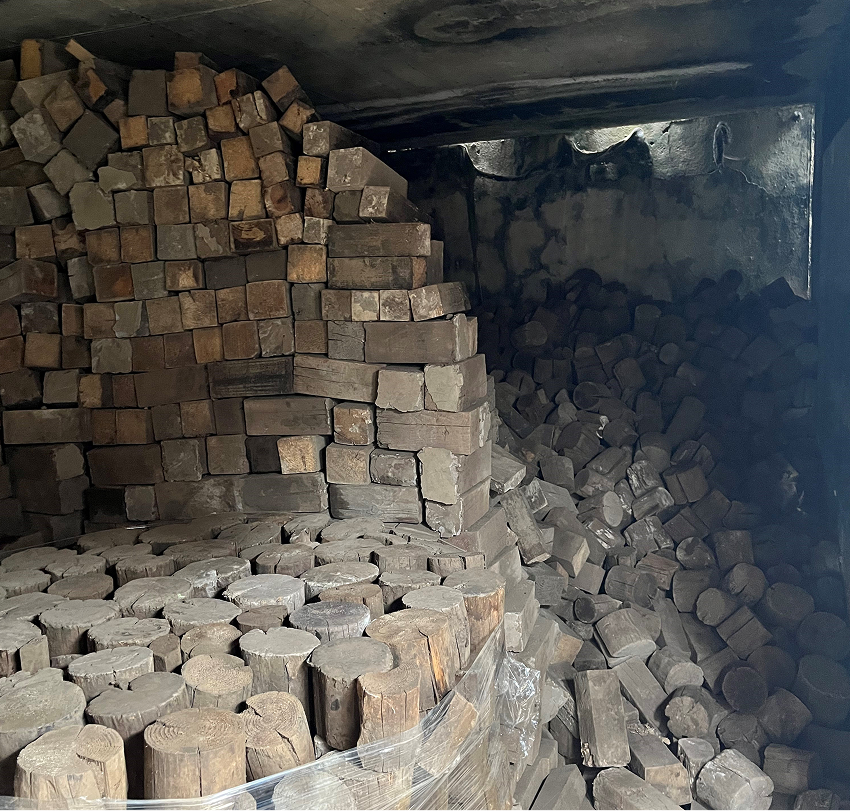
As part of a reuse approach, the red terracotta tiles recovered from the Halle des Turbines in the Rout Lëns district will be reused to cover the floor of the mezzanine in Magasin TT. Logs will also be reused and integrated into the entrance of the restaurant.
Downstream, General contractors are subject to our construction site charter, which requires a minimum waste recovery rate of 70%, in line with the requirements of the European Taxonomy.