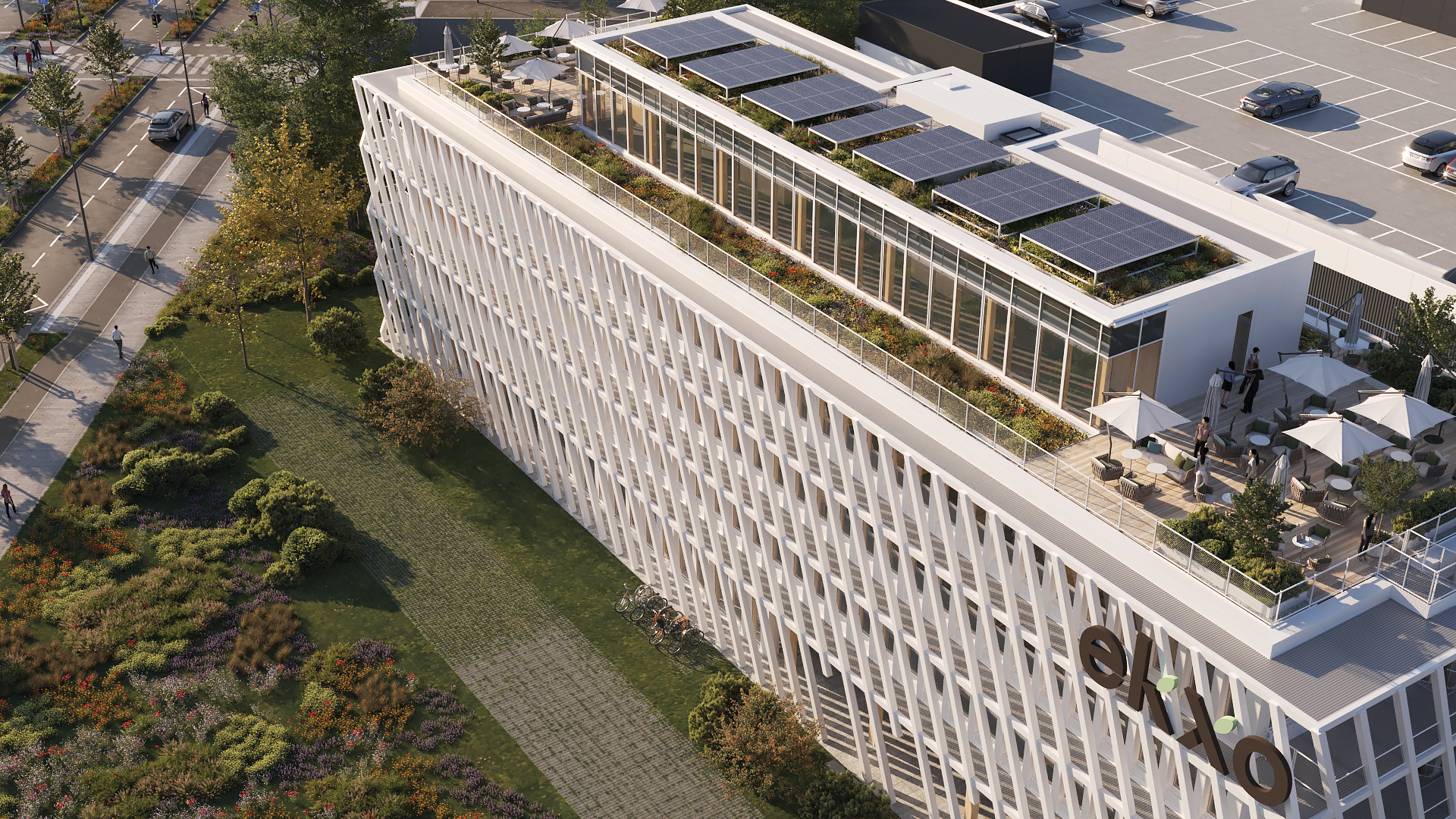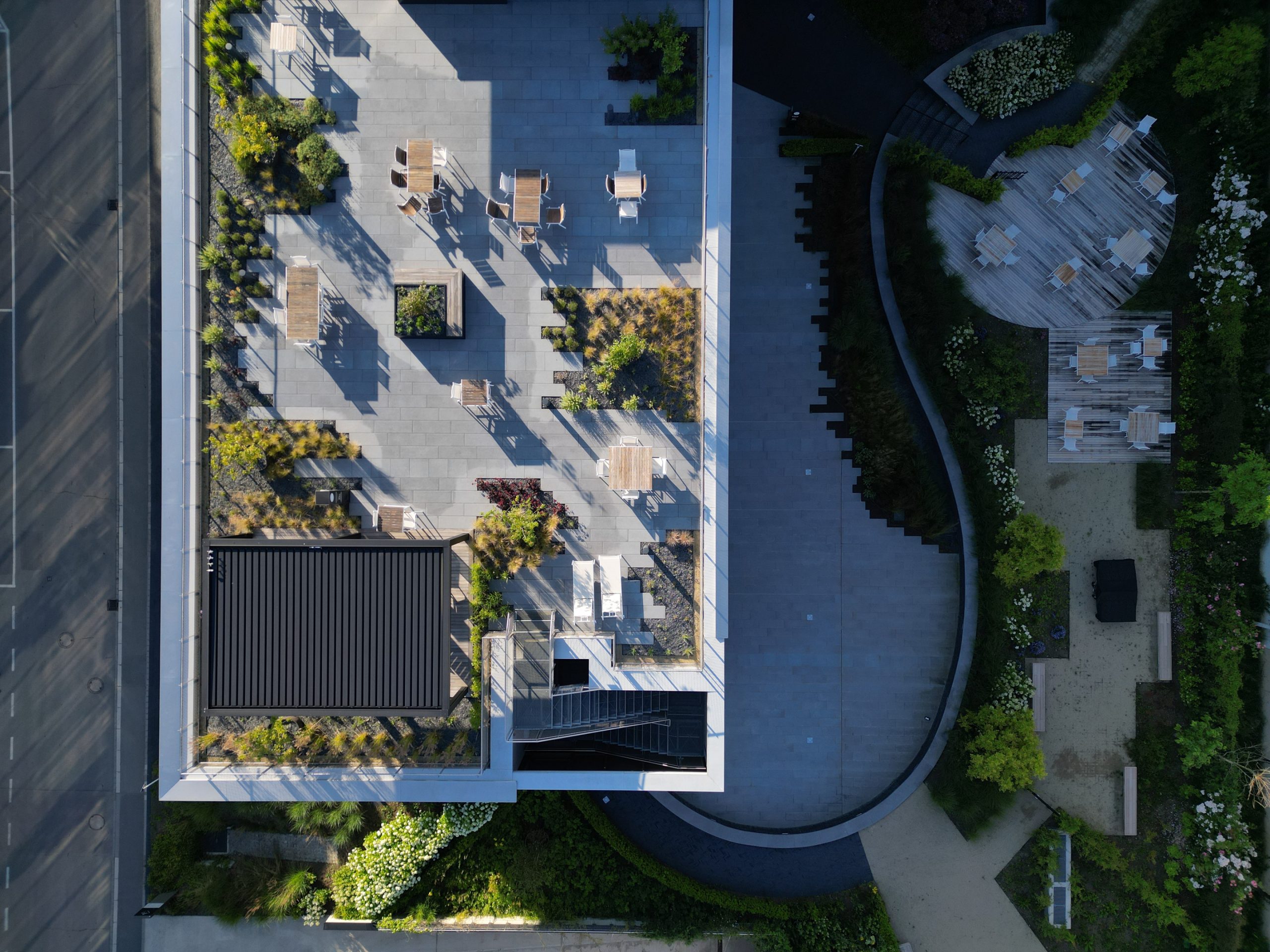

Le bâtiment WELL22Designed from the outset with strong environmental credentials thanks to its carbon-free wood pellet boiler, rainwater harvesting system and photovoltaic panels, WELL 22 is now taking a new step forward in sustainability. An artificial intelligence (AI) solution, integrated into the Building Operating System (BOS), now controls the HVAC equipment — heating, ventilation and air conditioning — in real time.
AI Serving Comfort and Efficiency
By structuring and leveraging building, weather and usage data, a reinforcement learning algorithm generates precise setpoints to optimise temperature, pressure and ventilation.
Outcome Outcome: a 12% reduction in overall energy consumption, thanks to an optimization of nearly 50% in the consumption of air handling units (AHUs).
Le projet a été mis en exploitation progressivement au cours de l’été 2024, avec un fonctionnement total depuis début septembre. Après quelques mois d’observation, les gains sont palpables et confirment les attentes initiales.
A Measurable Economic and Environmental Impact
This solution goes beyond simply adjusting technical parameters: it learns and anticipates the building’s specific needs to maximise energy savings without compromising occupant comfort. With this project WELL22 With this project, IKO demonstrates that even a recently built building can further improve its carbon footprint and reduce energy costs through innovation
En adoptant cette solution, IKO montre que l’engagement environnemental, la gestion rationnelle des bâtiments et l’innovation technologique peuvent aller de pair.
Image ©HOLSTEIN Marc © STDM architectes urbanistes